


Who should use this guideThis guide is intended for merchants who:
- Use Payrails as a payment orchestrator
- Use MyFatoorah for card, mada and Apple Pay processing in the Gulf region
- Have an active MyFatoorah account with API access
Create a MyFatoorah integration in Payrails
- Log in to the Payrails portal.
- Go to Settings → Integrations.
- Select Add instance to create a new integration configuration.
- Select the workspaces where this integration should be available.
About workspacesWorkspaces determine where this integration is available. They let you isolate provider setups by region or business line, or share the same configuration across multiple workspaces.
Step 1: Choose the integration type
- Select Payment.
- Continue to the next step.
Step 2: Choose the provider
- Select MyFatoorah.
- Continue to the next step.
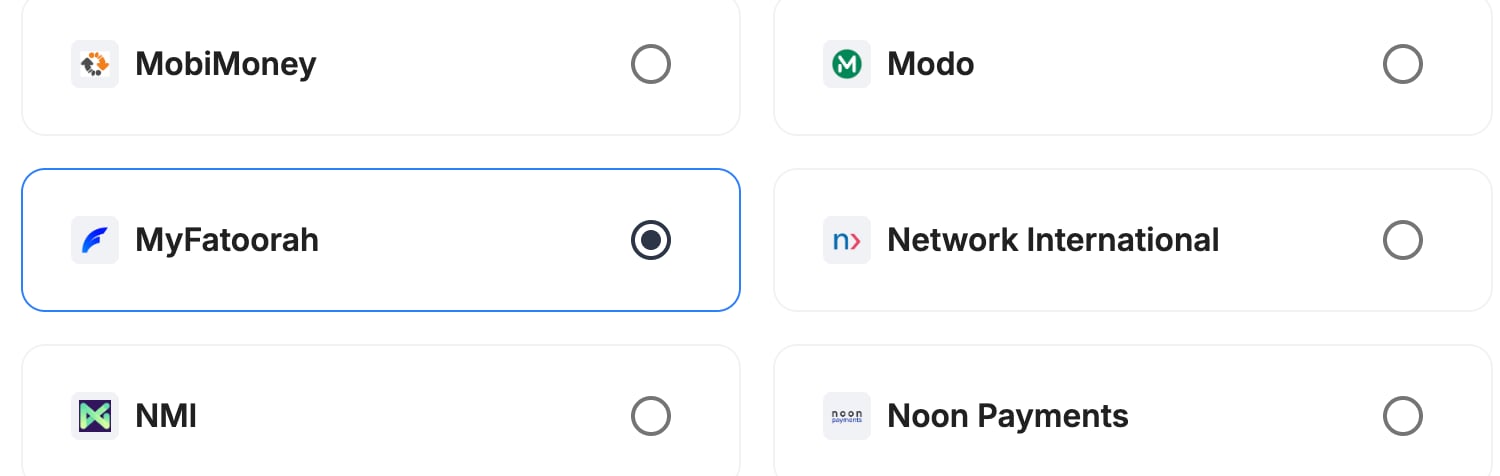
Step 3: Configure your MyFatoorah integration
Integration instance name
An integration instance is a specific payment provider setup in Payrails. You can create multiple instances for different regions, currencies, or business needs. Choose a clear, consistent name, as it is used in routing.In Payrails
- Enter an Instance name for your integration, for example
merchant_myfatoorah.

MyFatoorah payment method identifiers
In Payrails Enter the MyFatoorah ID for each payment method you accept. Payrails picks the ID for each payment: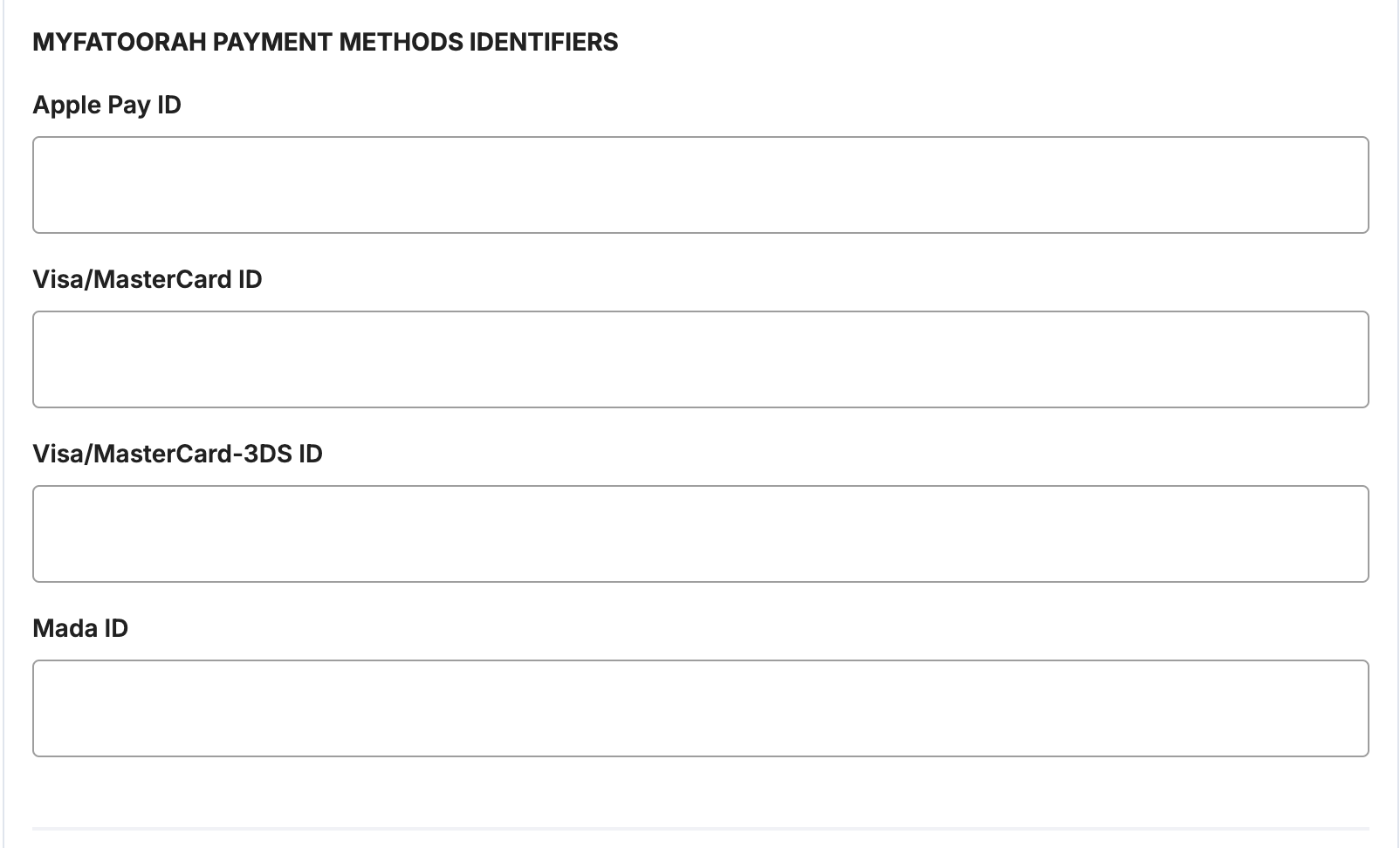
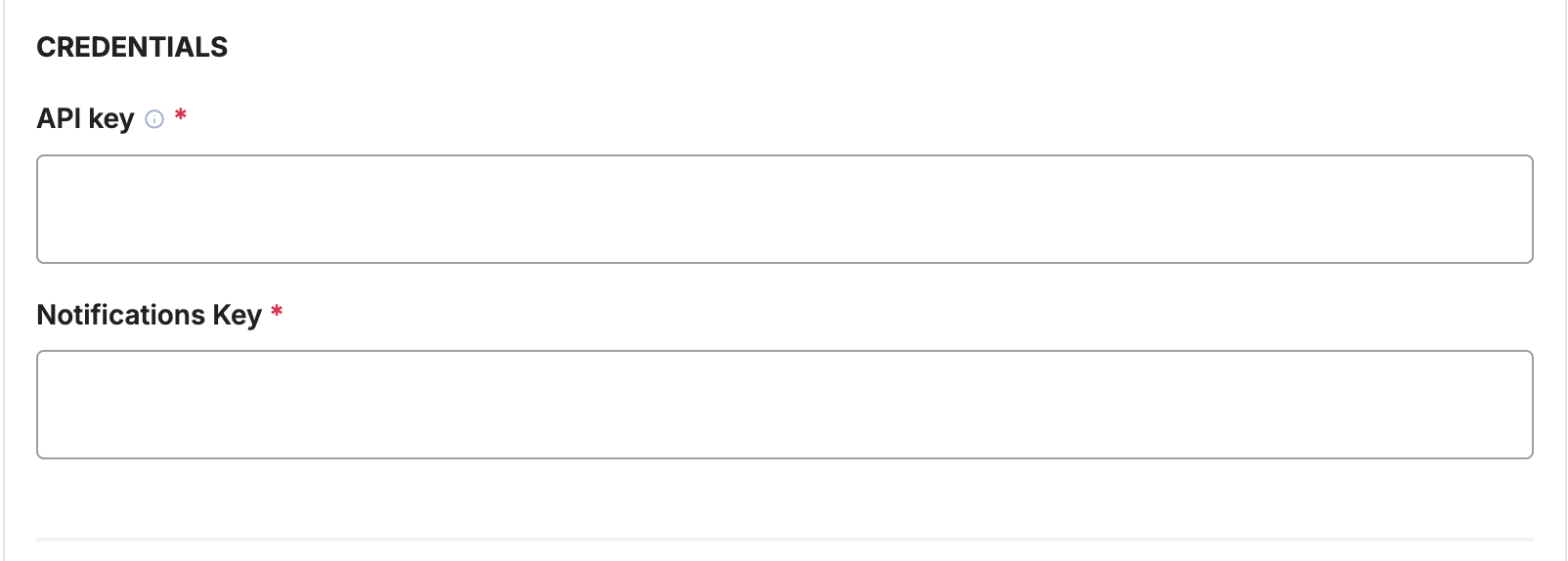
Credentials
In MyFatoorah- In the MyFatoorah portal, copy your API key, and the secret key of the webhook you create. Refer to Webhooks or notifications.
Payrails sends requests to the MyFatoorah test environment in test mode. In live mode, it sends them to MyFatoorah’s API for the order’s country: Saudi Arabia, Qatar or the main region.
Payment methods
In Payrails- Select Card, Apple Pay or both.

Webhooks or notifications
Payrails uses provider webhooks or notifications to receive asynchronous
payment status updates.
- Copy the Notification URL shown under Account configuration at the top of the integration form.
- In the MyFatoorah portal, open the webhook settings and enable webhooks.
- Enter the Payrails notification URL, and subscribe to transaction status changes and refund status changes.
- Copy the webhook secret key into Notifications Key in Payrails.
Request fields for MyFatoorah
Send these fields in the authorize request for card payments, in addition to the standard authorize fields. Required fields must be present for the payment to succeed. Payrails sends Optional fields to MyFatoorah when you include them. For more about meta fields, refer to Meta fields.Enable the integration
In Payrails- Select Save account to enable the integration.
- Confirm the integration shows as Enabled.
Next steps
- Run a test payment in the MyFatoorah test environment.
- Verify that:
- The payment appears in the MyFatoorah portal.
- The payment status updates correctly in Payrails.
- Once verified in test mode, repeat the setup in live mode.