
Checkout.com
A step-by-step guide for setting up your Checkout.com payments integration in the Payrails portal.
Who should use this guideThis guide is intended for merchants who:
- Use Payrails as a payment orchestrator
- Use Checkout.com Payments
- Are approved to process raw card data
We use a server-to-server integration with Checkout.com, so your account must be enabled to process raw card data. If this isn’t enabled, payments won’t work in production. Please contact your Checkout.com account manager or support team to activate it.
Create and configure a Checkout.com integration in Payrails
- Log in to the Payrails portal.
- Go to Settings → Integrations.
- Select Add instance to create a new Checkout.com integration configuration.
- Select the Workspaces where this integration should be available.
About Workspaces
Workspaces determine where this integration is available. They let you isolate provider setups by region or business line, or share the same configuration across multiple Workspaces.
Step 1: Choose the integration type
- Select Payment.
- Continue to the next step.
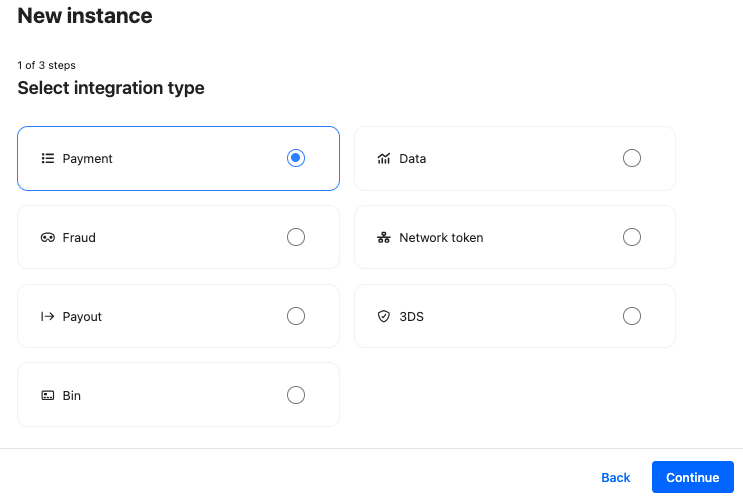
Step 2: Choose the provider
- Select Checkout.com.
- Continue to the next step.
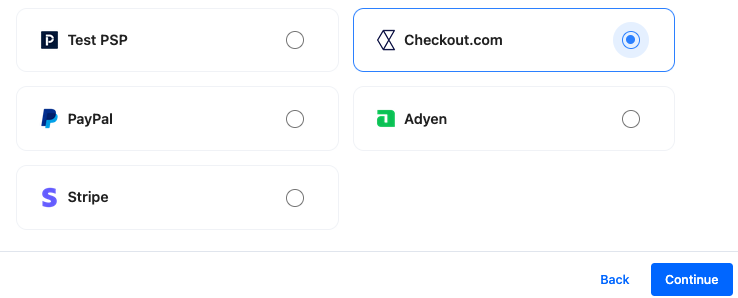
Step 3: Configure your Checkout.com integration
What you’ll need from Checkout.comBefore you begin, make sure you have access to:
- Processing Channel ID (
pc_XXX)- Checkout.com Access Key ID
- Checkout.com Access Key Secret
- Webhook signature key
Sign in to your Checkout.com dashboard to complete this step.
Integration instance name
An integration instance is a specific payment provider setup in Payrails. You can create multiple instances for each provider based on region, currency, or business needs. Choose a clear, consistent name, as it is used in routing.
In Payrails
- Enter an Instance name for your integration.
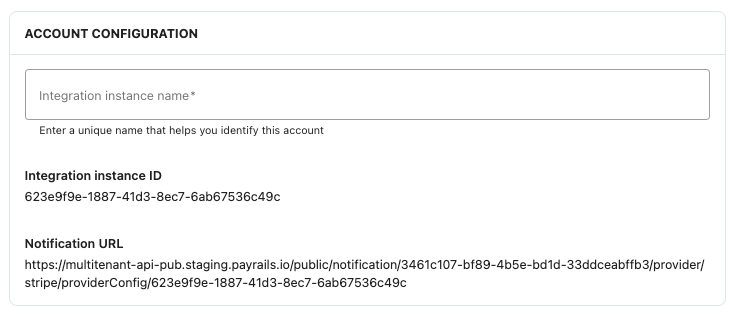
Account details
In Checkout.com
- Sign in to the Checkout.com Dashboard.
- Locate your Processing Channel ID in the account or processing channel settings.
- Copy the Processing Channel ID (
pc_XXXX).
In Payrails
- Paste the value into the Processing Channel ID field.
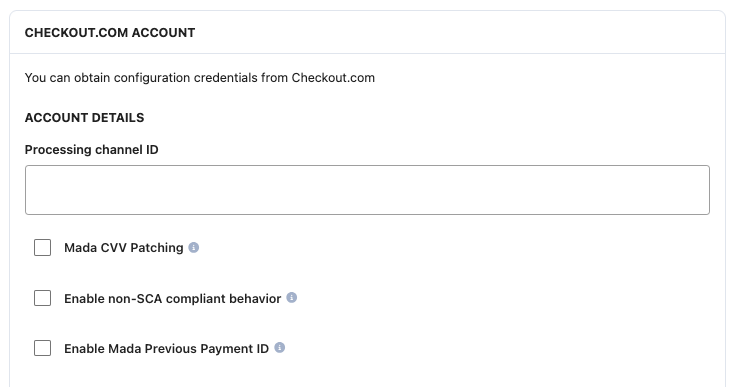
API credentials
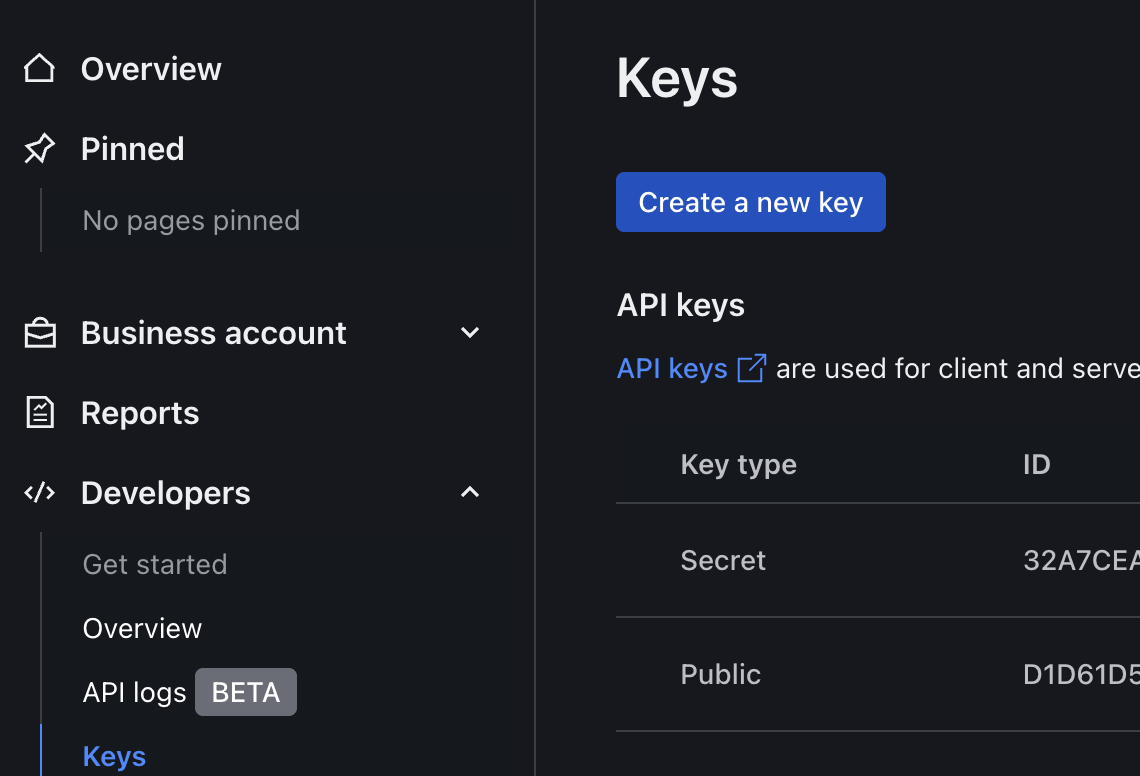
In Checkout.com
- Go to Developers.
- Select Create new key.
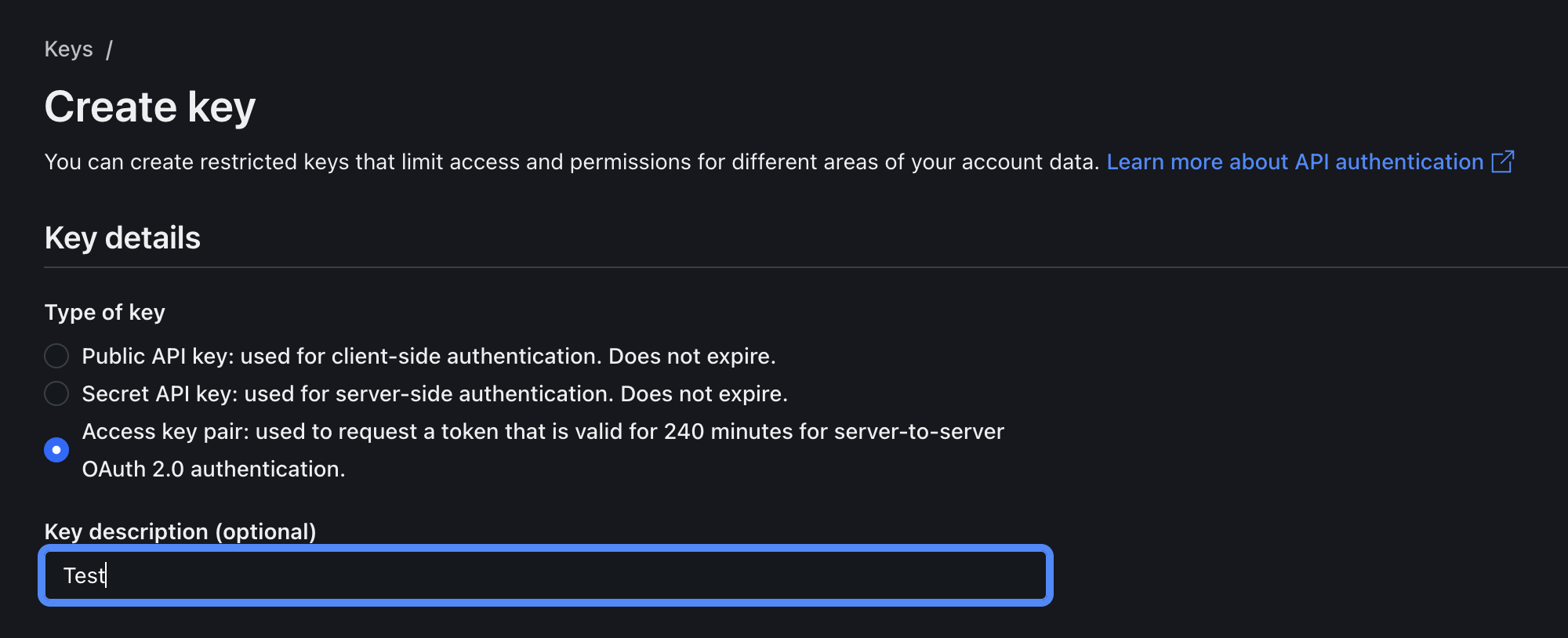
-
In Key details, select Access key pair.
-
Add a Description to help identify the key.
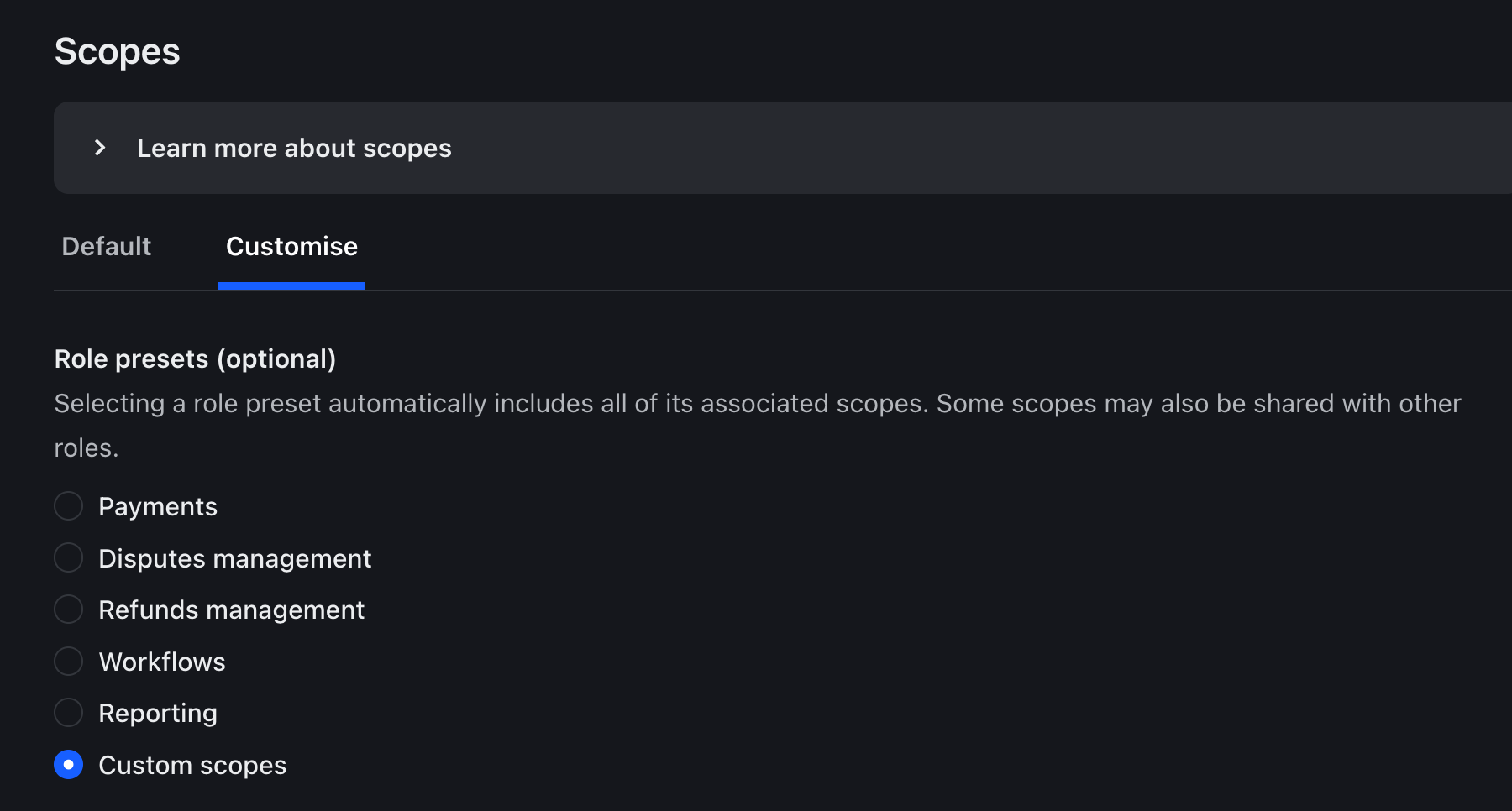
-
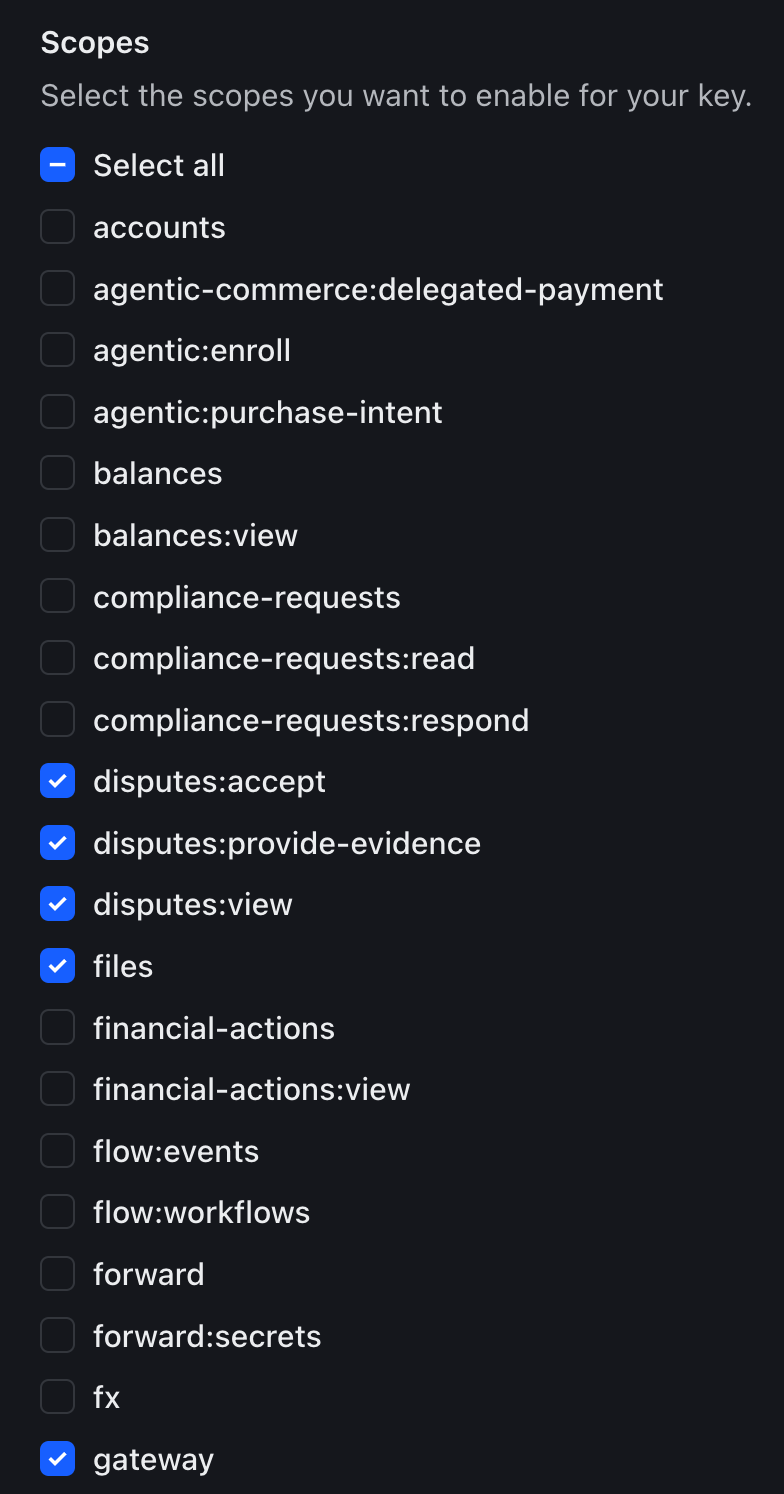
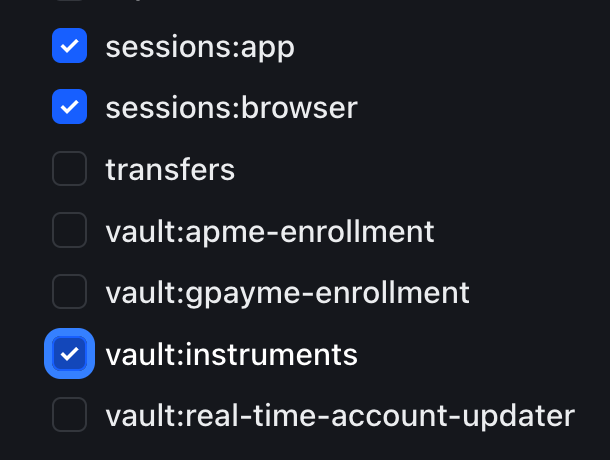
Under Scopes → Customise → Custom scopes, enable:
-
disputes:accept -
disputes:provide-evidence -
disputes:view -
files -
gateway -
sessions:app -
sessions:browser -
vault:instrument
-
-
Select Allow any processing channel (or restrict if required).
-
If needed, locate your Processing Channel ID here (
pc_XXX). -
Select Create new key.
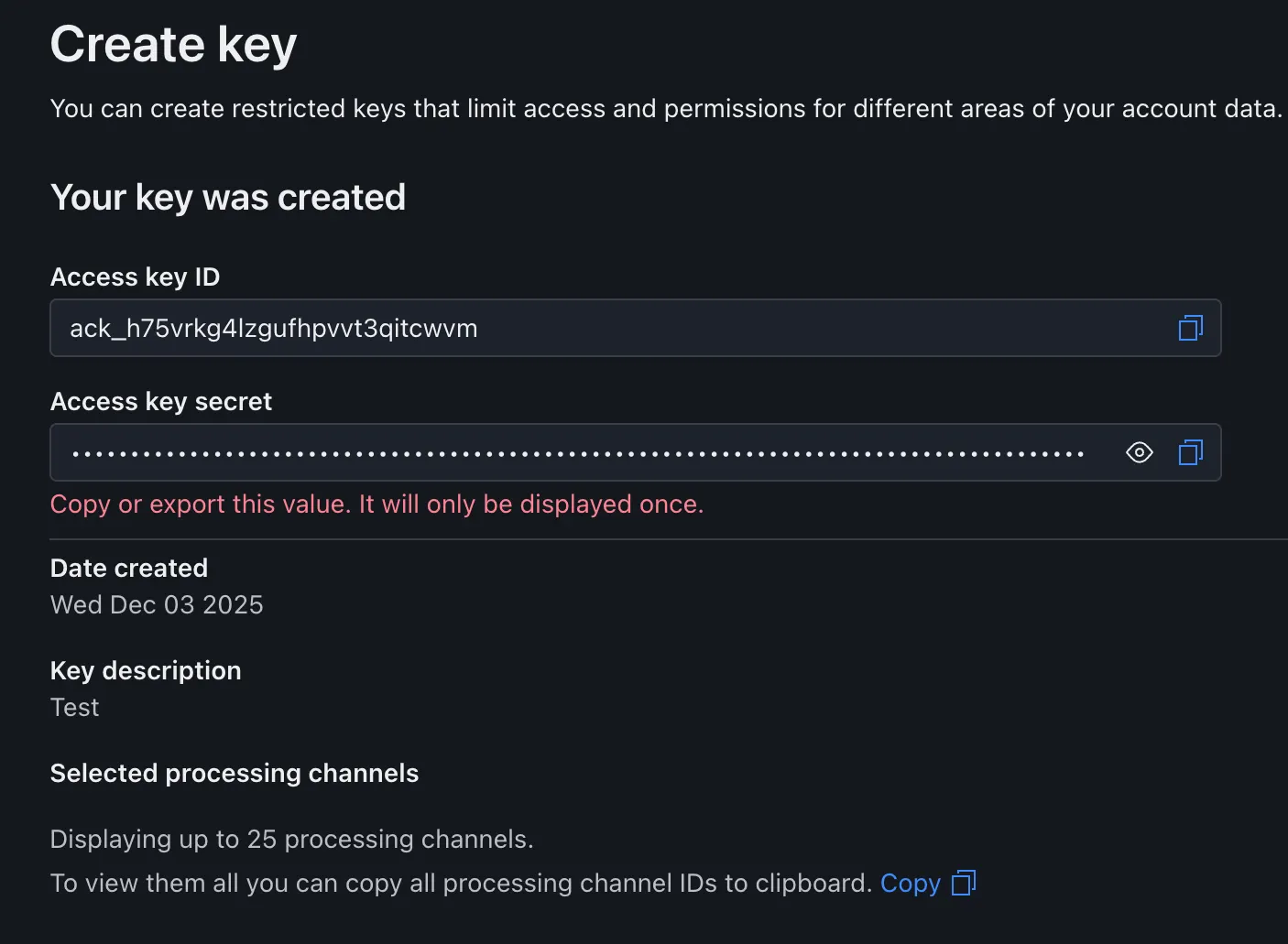
- Copy the Access Key ID and Access Key Secret.
In Payrails
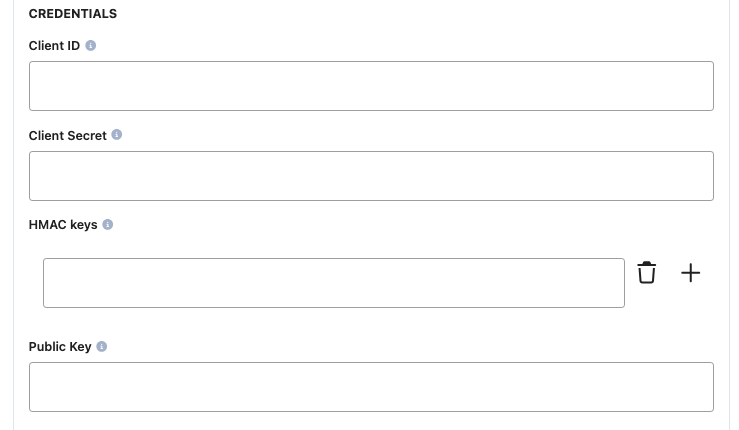
- Paste the credentials into the corresponding fields.
Webhooks (notifications)
Payrails uses Checkout.com webhooks to receive asynchronous payment status updates.
Create the webhook in the same mode (test or live) as your Payrails integration.
In Checkout.com
-
Go to Developers → Webhooks.
-
Select New webhook.
-
Enter a name for the webhook.
-
Paste the Notification URL from Payrails.
-
Generate a Signature key.
-
Select:
- All events
- All entities
- All processing channels
-
Save the webhook.
In Payrails
- Paste the Signature key into the HMAC key field.
Payment methods
In Payrails
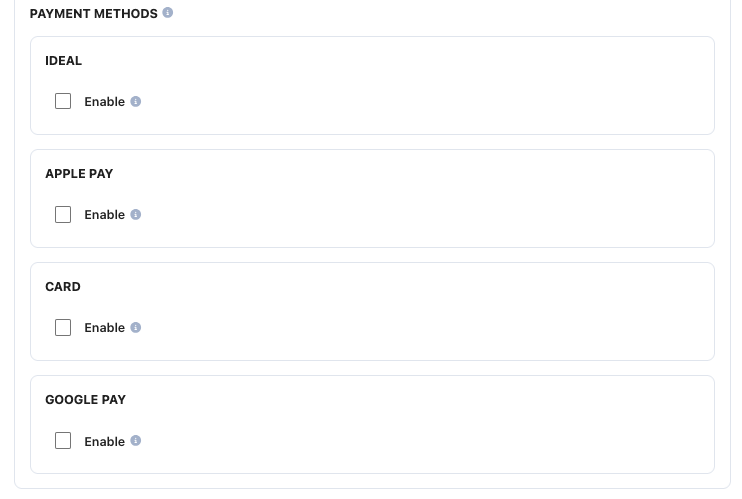
- Select the payment methods that should be enabled for this integration.
Enable the integration
In Payrails
- Select Save account to enable the integration.
The Enabled status indicates that the Checkout.com integration is active.
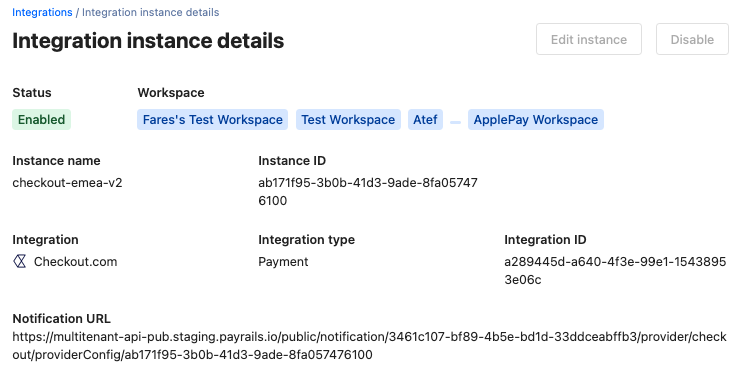
Your Checkout.com integration is now ready to process payments.
Next steps
- Run a test payment using a supported Checkout.com test card.
- Verify that:
- The payment appears in Checkout.com.
- The payment status updates correctly in Payrails.
- Once verified in test mode, repeat the setup in live mode.
→ Continue to: Test a payment
Updated 4 months ago